
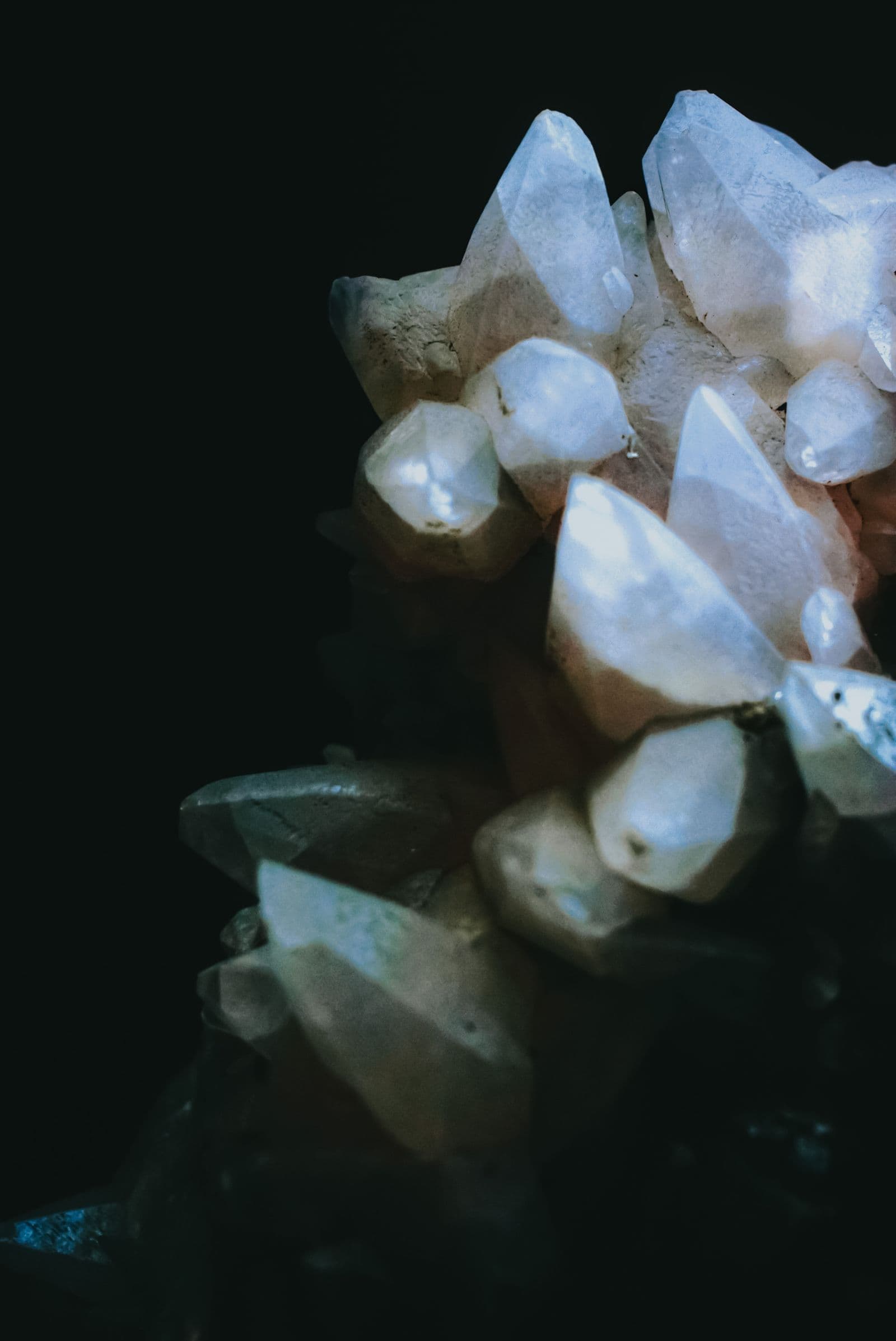
Barite guide
What is barite?
Barite is a barium sulfate mineral with the chemical formula BaSO₄. Thanks to its high density and chemical stability, it is an industrial raw material used in drilling, paint, plastic, rubber and some construction applications.
Brief summary
Chemical formula
BaSO₄
Mineral type
Sulfate mineral
Key property
High density
Main use
Drilling and industry
Almons focus
Şarkikaraağaç / Isparta
Chemical structure
BaSO₄ is the chemical formula of barium sulfate. This compound, which forms the basic chemical structure of barite, consists of one barium (Ba) ion and one sulfate (SO₄) ion.
The low solubility and chemical stability of barium sulfate make it a reliable raw material in many industrial processes. It does not react significantly with most acids and bases, and largely preserves its structure at high temperatures.
The BaSO₄ content measured in a barite sample is a basic indicator of mineral purity and core chemical content. On its own, however, it does not determine quality; it should be read together with values such as density, brightness and moisture.
Formula
Barium (Ba) + Sulfate (SO₄)
Key properties
Barite's industrial value comes not from a single property, but from several complementary physical and chemical characteristics.
BaSO₄ purity
In our run-of-mine barite, BaSO₄ content is roughly 86–94%, suitable for a broad range of industrial uses.
Density
Run-of-mine barite density is roughly 4.10–4.30 g/cm³, useful in drilling mud and weighting applications.
Chemical stability
It does not react significantly with most acids and bases. This makes its behaviour predictable in process lines and within the final product.
Low solubility
Its solubility in water is quite low. This helps barite stay stable in aqueous mud, paint and coating systems.
Brightness and colour
Although it varies by site, barite can reach high brightness values and supports colour character in paint, plastic and filler applications.
Grindability and filling
Grindable to suitable particle sizes, barite can be preferred as a filler mineral for its balance of density, surface behaviour and cost.
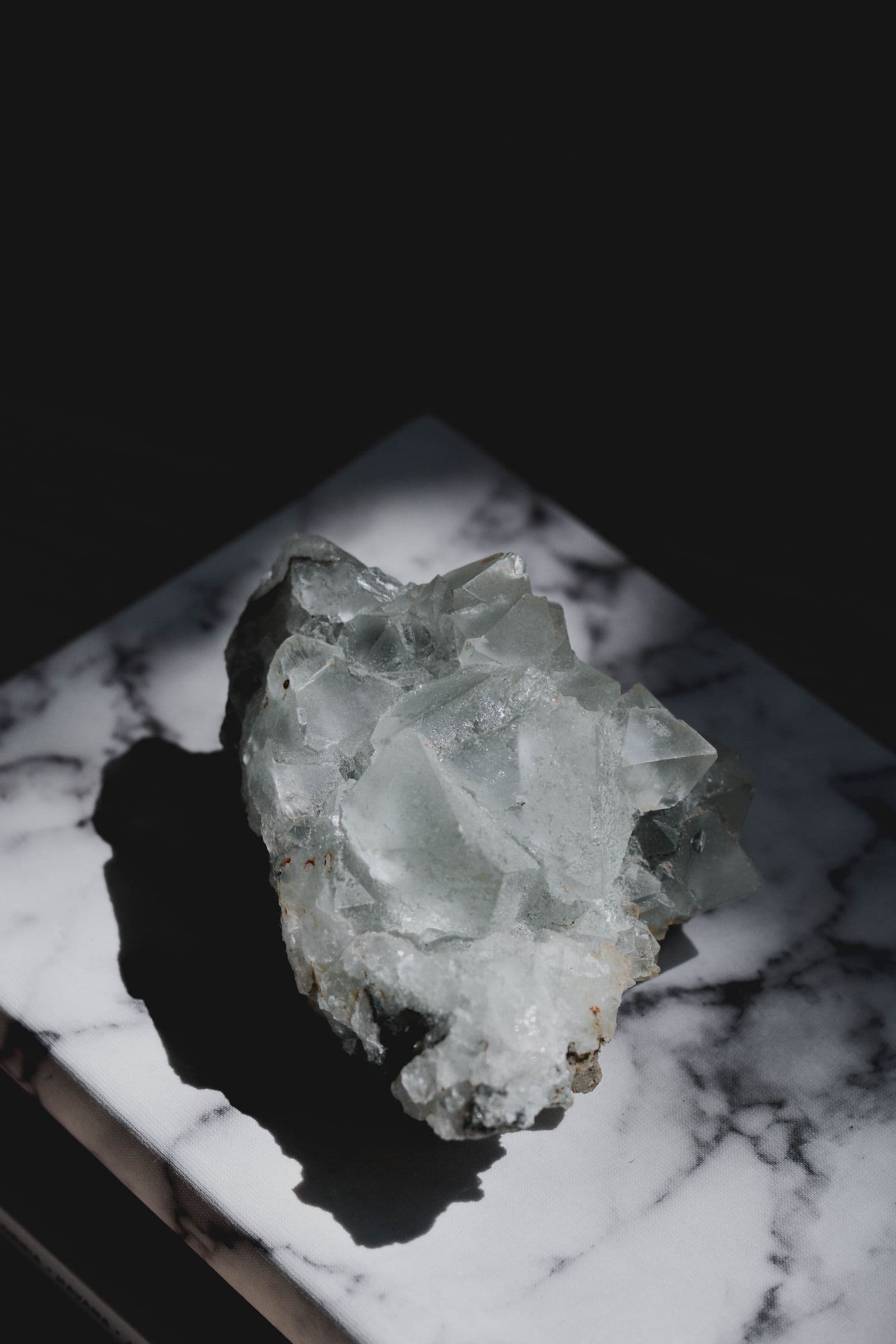
Barit kristali · BaSO₄
Usage logic
Barite is not just a dense mineral. Considering its density, stability and filler character together, it takes on a technical role across different industrial processes — from drilling mud to paint, from plastics to construction chemicals.
Use cases
We summarize, briefly and technically, which property of barite creates value in which sector.
Drilling
In oil and natural gas drilling it is used to weight drilling muds. Its high density helps control pressure within the well.
Paint and coatings
It can feature in paint and coating formulas requiring filler, surface balance and added weight. Its chemical stability makes the formula's behaviour predictable.
Plastics
In some plastic types, as a filler mineral, it can affect product density, surface character and cost balance.
Rubber
It can be used in rubber compounds as a filler and density additive, especially in applications requiring weight and acoustic behaviour.
Construction chemicals
It is used in some mortar, plaster and special coating systems to meet weight, density or filler requirements.
Sound and density applications
In some sound insulation, heavy flooring and protective construction layers, it is preferred for its density and mass.
Mine context
Barite is the name of the mineral. A barite mine describes the site where a barite-bearing deposit is extracted or evaluated. In other words, barite is a compound, while a barite mine is a work area.
At a barite mine, site conditions, vein structure, access layout and quality monitoring cannot be thought of separately. Regular measurement, recorded progress and site-specific reading directly affect whether the extracted material is fit for industrial use.
Almons' approach is to run the mine with an orderly, traceable and field-proven professional discipline.
Reading the analysis
A barite sample is not assessed by a single value. Read together, the headings below make the mineral's character, fitness for use and quality line clearer.
- BaSO₄
The percentage of barium sulfate; the core indicator of mineral purity. In our run-of-mine barite it is roughly 86–94%.
- Density
Density is read in g/cm³. Run-of-mine barite is roughly 4.10–4.30 g/cm³, useful in drilling mud and weighting applications.
- Brightness
Brightness matters for paints, plastics and fillers where colour behaviour counts. In run-of-mine barite it is roughly 85–90%.
- Moisture
Low moisture keeps the product's behaviour predictable and stable through storage, grinding and transport.
- SiO₂
A low silica ratio indicates high mineral purity, keeping impurity and abrasiveness to a minimum.
The values are a technical summary of a sample taken from the field. Final shipment and fitness for use must be confirmed separately by sample/laboratory testing.
Türkiye context
Türkiye has a rich variety of industrial minerals across different geological belts. Barite is one of the industrially important minerals that can be found in various regions of Türkiye.
When evaluating barite resources, site conditions, vein structure, quality parameters and intended use are read together. For this reason, the character of each region and each site is examined on its own; general reserve rankings are not equally valid for every site.
Regional focus
Almons' operational focus is the Şarkikaraağaç district of Isparta province. The region lies on the Taurus geological belt and sits on a line long known for industrial minerals.
For Almons, the area around Şarkikaraağaç is more than a point on the map. The daily rhythm of the site, the vein behaviour and the access layout are read with practical knowledge gained over the years.
This local knowledge turns into orderly work, careful quality monitoring and a long-term perspective in barite operations.
Almons' focus
We carry out barite mining in Şarkikaraağaç, Isparta, working with field-earned experience, local knowledge and a disciplined, steady approach.
Frequently asked questions
At Almons, we run barite mining operations and barite extraction in Şarkikaraağaç, Isparta.
Technical notes
The technical explanations on this page combine widely accepted geological and industrial knowledge about barite and barium sulfate with practical field experience, conveying the subject clearly.
General mineral knowledge
Measures such as BaSO₄ chemistry, density and brightness are consistent with the established geology and mineralogy literature on industrial minerals.
Industrial usage framework
Drilling, paint, plastic, rubber and construction applications are barite's internationally recognized typical uses; the page describes these areas within a general technical framework.
Field reading
The information in the Şarkikaraağaç and Isparta context is based on the Almons team's field experience in the region and established knowledge of the Taurus geological belt.
Analysis values
The analysis values shared on the page are a reference for reading the general character of the current sample. An authorized, sample-based laboratory report is required separately for each job and application.
Next step
On our operations page you can review barite extraction, quality monitoring and our work order; for your questions, you can reach us directly.
We usually respond within one business day.